OC1 Leash Attachment? Ditch the Leg Leash and wear it on your waist . . .
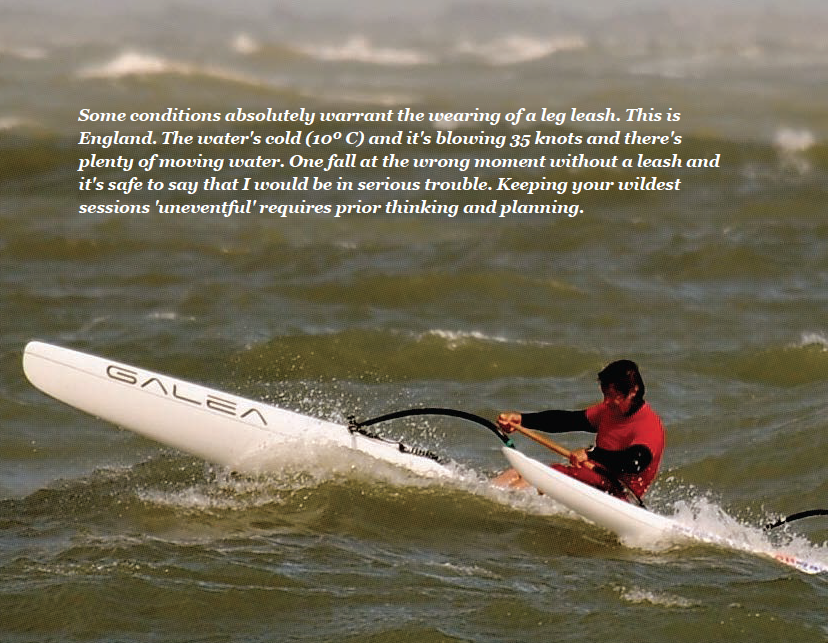
Exercising one's own personal 'risk management' strategy when it comes to solo or double OC paddling exploits, should be a natural and instinctive part of every paddlers check list prior to setting off. However, due to the nature of the species, it's common place for many of us to have an over inflated opinion of our abilities and an equal underestimation of the elements capacity to change a good day into a bad one.
The merits of wearing a leg leash on an OC1/OC2 or surf ski has been a subject on the table for some time and while at times it seems appropriate, there are times when it clearly isn't.
When out beyond the surf line, or where moderate to high winds are present and when downwind paddling at any speed, seems the most appropriate time to 'leash up' and if you're alone, it becomes even more crucial.
Even on the lightest wind days with minimal water movement, falling without a capsize taking place, can result in the canoe surging well ahead of you when paddling with the wind behind or on your quarter. Falling and keeping ahold of the paddle, I then throw it toward the canoe immediately on surfacing, then begin to swim after it. Don't delay, even if the canoe appears to be near, it only takes one gust, one wave and your day could go bad.
Outrigger Connection Hawai'i, were the first OC1 manufacturer to include a centralised under seat, retractable leash, which is neat, efficient and serves as a constant reminder to get connected.
The problem with anything such as this however, is that it adds a mechanical element to the canoe which can break or even fail and is probably not as strong or reliable as several alternatives.
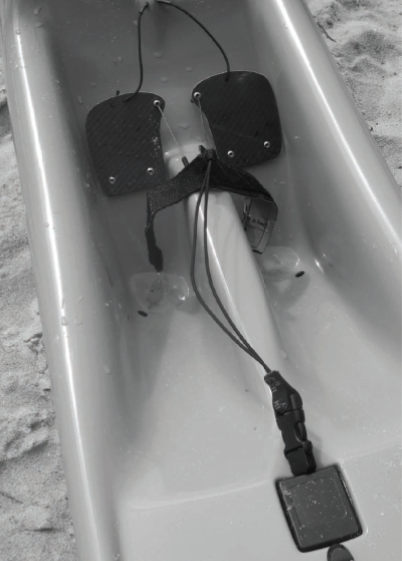
Outrigger Connection Hawai'i, were the first OC1 manufacturer to include a centralised under seat, retractable leash, which is neat, efficient and serves as a constant reminder to get connected.
More straight forward, has been the use of knee attached (upper calf) cuff, short coiled leashes, which then attach to the front i'ako. It's about as simple as it gets. It works and does a very good job of doing what is intended; preventing the loss of your canoe through separation.
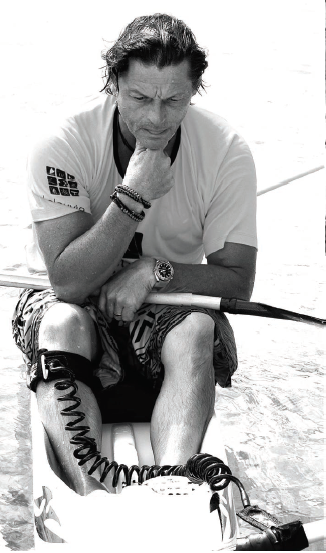
Conventional set up - this leash is too long (stretched from use). Cuff in this case is attached to right leg, below knee (you'll need a 'knee cuff' not 'ankle cuff'). Leash attached to front i'ako. Coil can knock on the hull (annoying) or get trapped behind the pedals (annoying) and all in all, it's in the way of things.
The primary issue with this leash arrangement, is simply the aftermath, recovery and remounting which involves leash management in avoiding becoming tangled up in a mess. While many paddlers may wear coiled leash attachments, many have yet to actually capsize wearing one and if you're one of those, it's advisable to practice as you may find it confusing and a little threatening. On the one hand you've prevented the loss of your canoe, but now you're figuring out what to do next?
Left or Right Leg Attachment
There's much talk about which leg to attach the cuff. Frankly it won't make much difference to the mess you find yourself.
Wearing it on the right leg, attached to the front i'ako means that the coil crosses over the steering pedals and will be more likely to interfere with the steering. The only advantage is when you fall without capsizing the coil remains in alignment with the i'ako as against travelling across your legs if you remount from the non-ama (right) side. If you prefer to remount from the left, then wear the cuff on the left leg.
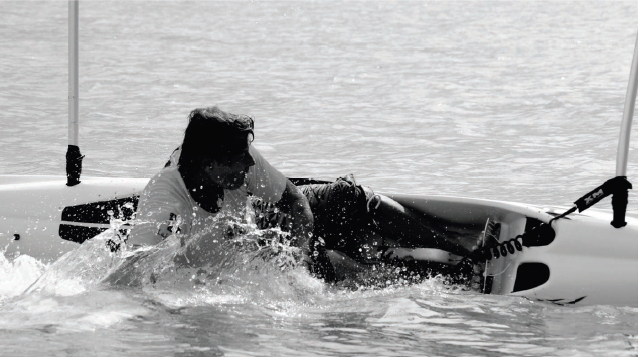
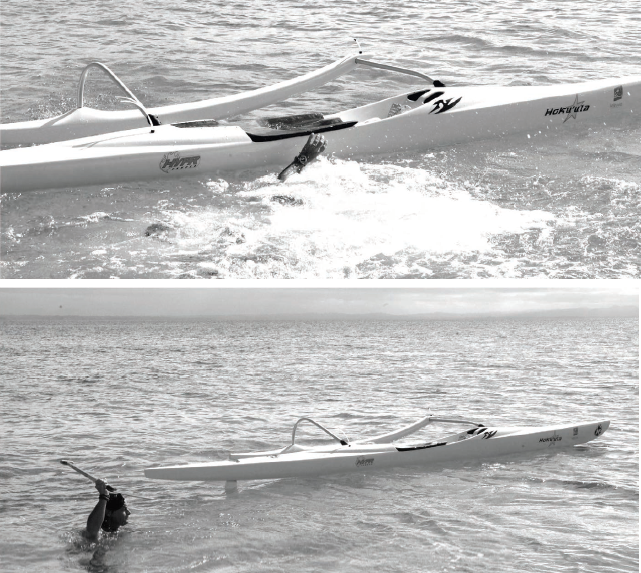
Top image shows leg leash and front i'ako connection. As you fall the leash is already beginning to stretch. This can lead to recoil which pulls the canoe forward so the rear i'ako is level with your head.
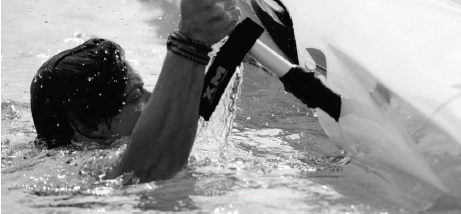
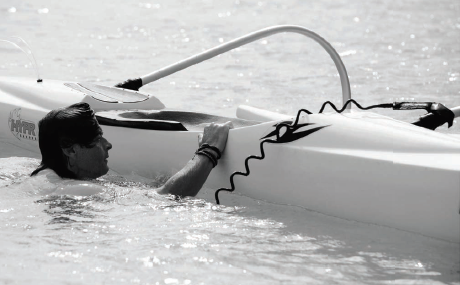
Electing to push roll the canoe over by pushing upward on the i'ako (it can help to grab the opposite gunnel and pull toward you, slow the roll to avoid ama damage. You can see how much tension there is on the leash when leg mounted (below). This can hinder the recovery of the canoe as it acts to pull against the roll.
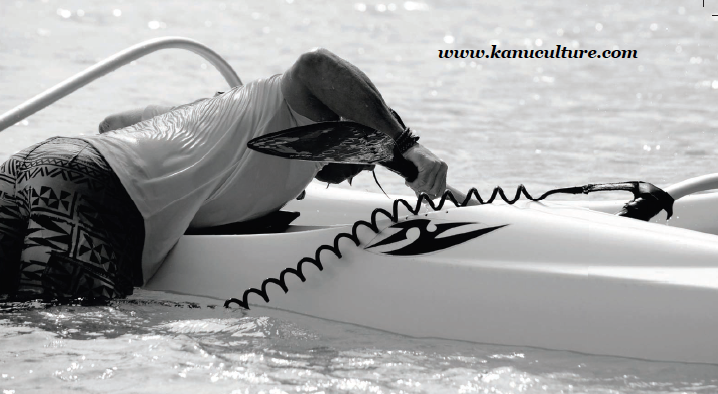
Remounting from the right with leash attached to the left leg and the front i'ako, you can see the tension in the leash and problems it can lead to, attached to the right leg can alleviate some of this tension. THE ISSUE HERE IS THAT REMOUNTING FROM THE RIGHT REQUIRES ATHLETICISM BEYOND MERE PADDLING ABILITY - in rough waters, it can be highly problematic.
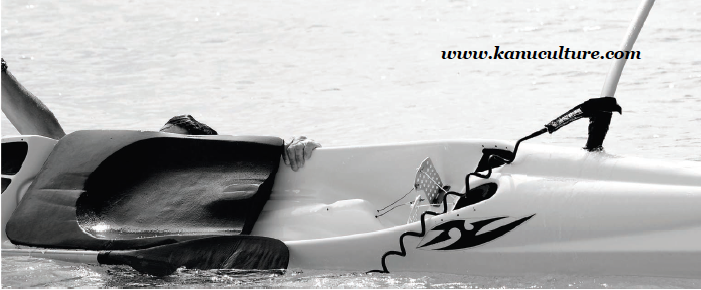
Rolling the canoe over from the non-ama side, leash still attached to the upper calf and front i'ako, you can see the problem immediately. The only options now; remove leash and climb on or duck-dive to non-ama side and remount from there.
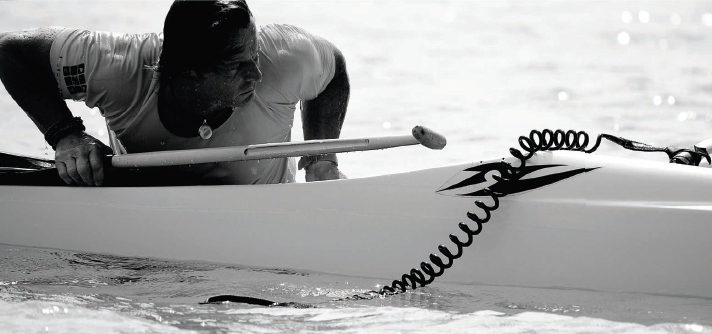
A not so obvious option, is to remove the leash from the knee, duck dive under the canoe, resurface and mount from the left. This may seem like common sense; but if you find yourself panicking a little, common sense can soon evade you.
Waist Leash - the game changer
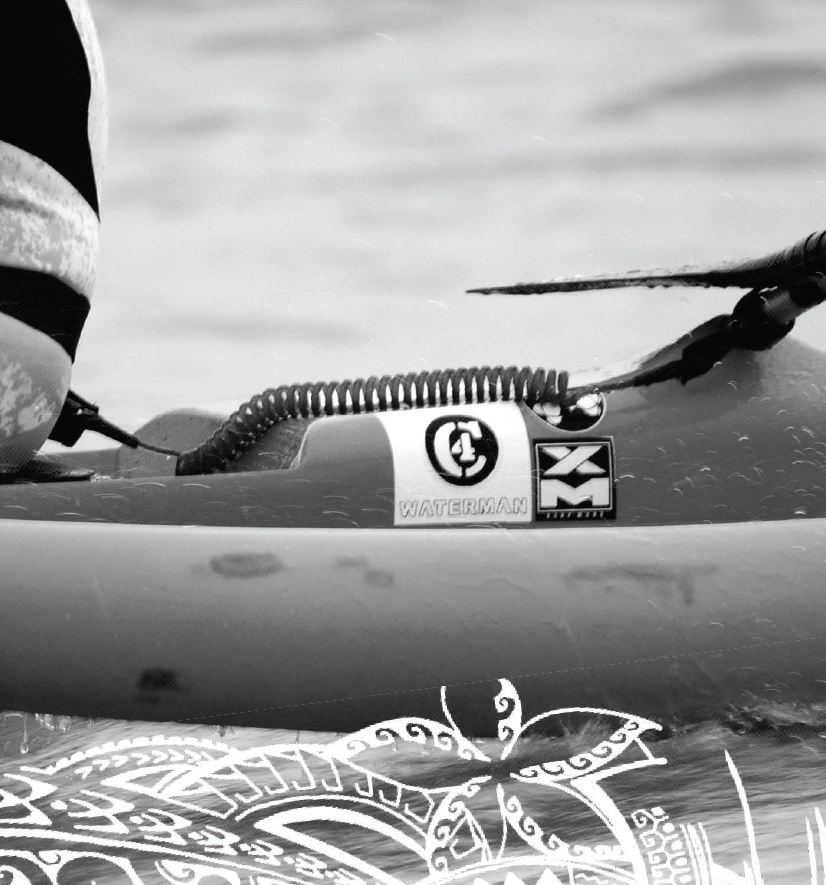
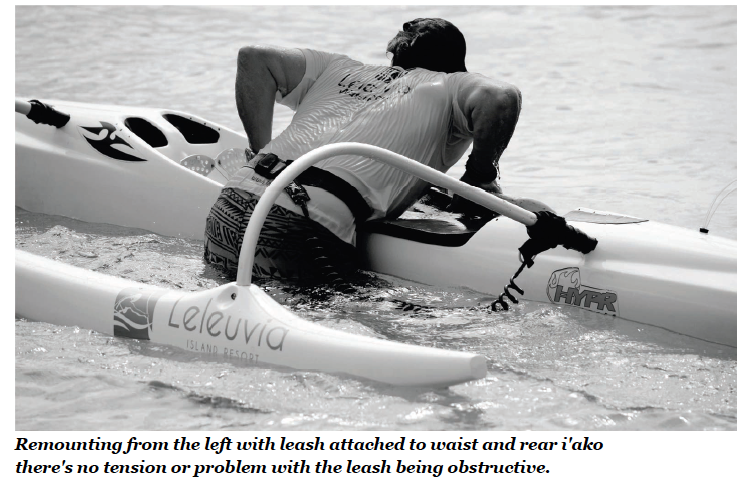
Wearing your leash around your waist connected to the rear iako, puts in a place so as you don’t even know your wearing it - the benefits make a significant difference to the practical and safe wearing of such a device.
Ridding of leg attachment and moving to a waist attachment is a paradigm shift in thinking which resolves many issues.
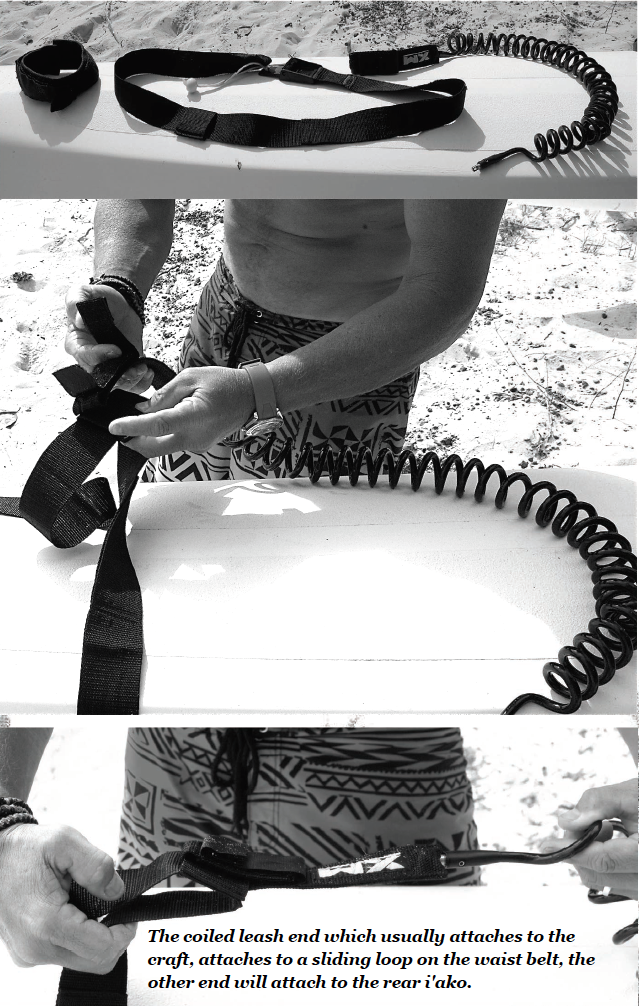
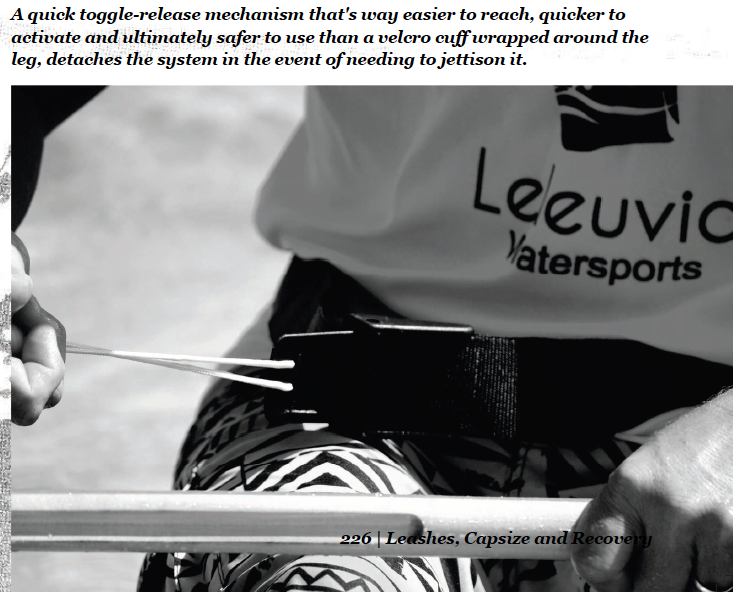
Your first thought should be, what is the quick release system set up with this and how does it all go together? The system is very simple. All you will need is a short coiled leash of appropriate build quality (don't buy cheap) and it won't matter if it comes with an ankle or knee cuff and a separate waist belt fitted with a quick release toggle arrangement. These can then all be put together to form a very neat solution for the need to 'tidy' things up.
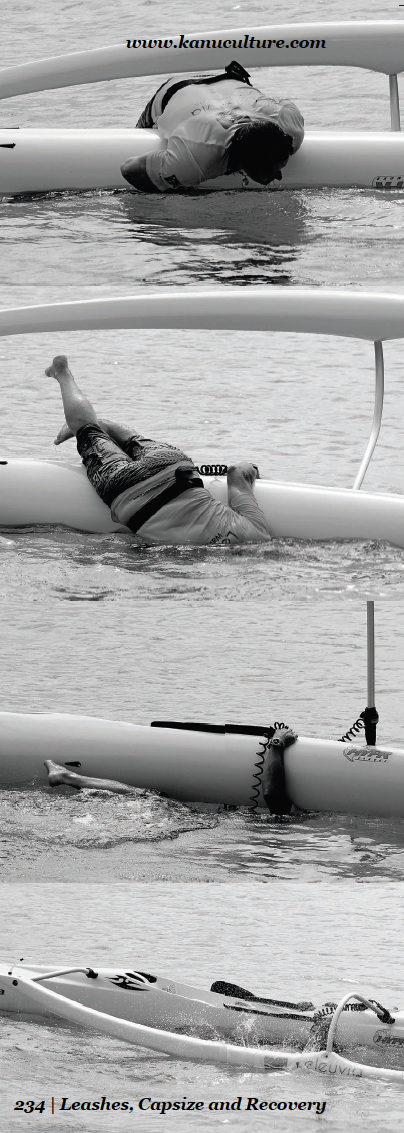
Sliding over your canoe hull bearhugging the canoe works often after a few attempts. Damage to the hull can be a concern. You control the fall rate of the ama by holding on to the hull as you roll.